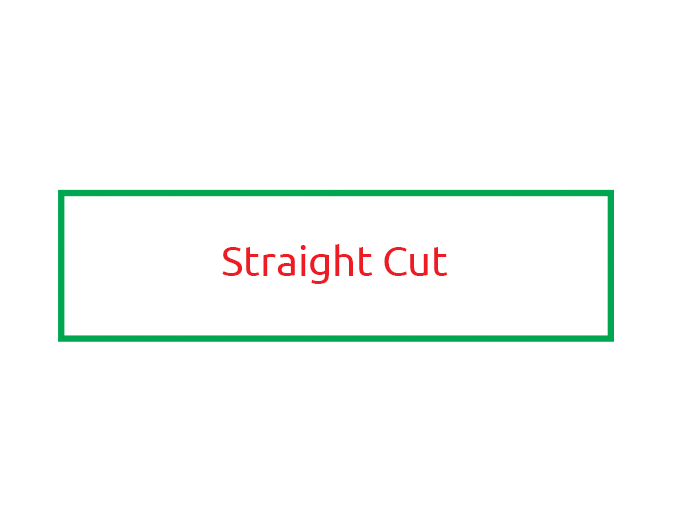
No fold. Straight cut labels are usually sewn on all 4 sides, the top, or on left and right side only. There is No extra charge for this type of fold.
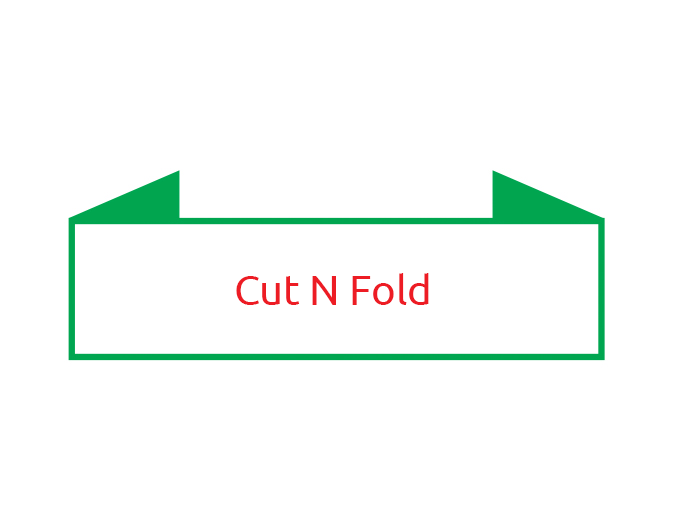
Cut N fold labels are folded down on the left and right side. They are applied the same way as straight cut Damask Woven labels, but have a softer edge. Sewing contractors may charge more for this fold, so please consult them before making your final decision. No extra charge for this fold.
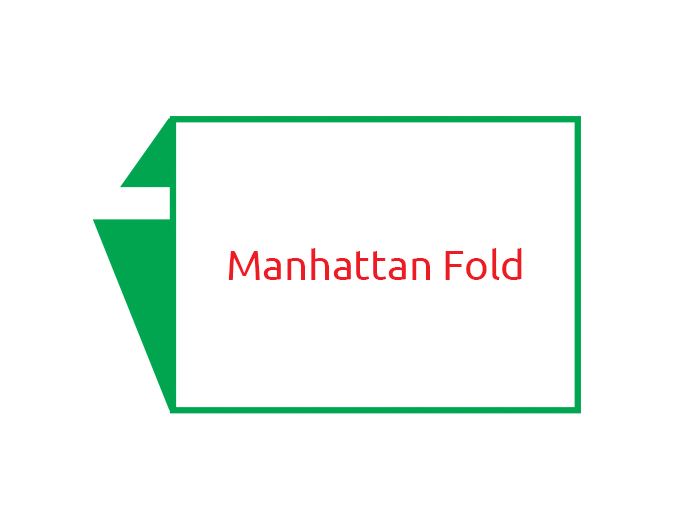
A Manhattan fold is like a centerfold label, except the top of the label is folded down, creating a flap to tuck the bottom fold into. This type of fold requires an extra charge.
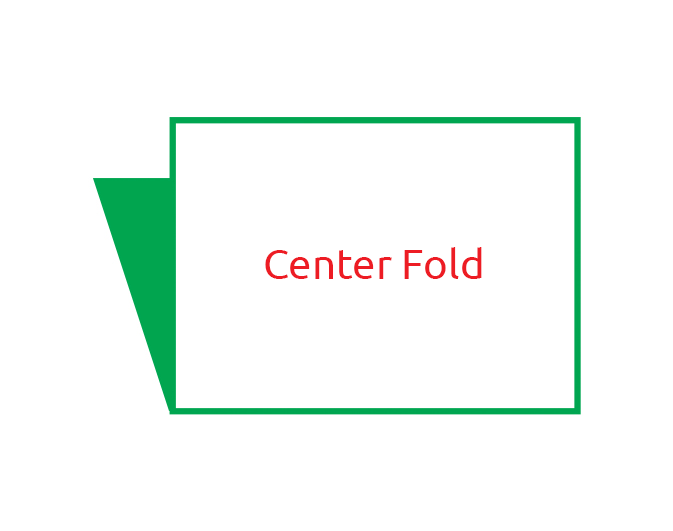
These labels are folded in the middle and usually sewn into a seam. Centerfold labels can also be used for sleeve and hem labels. No extra charge for this fold, unless label is oversized or very small before fold.
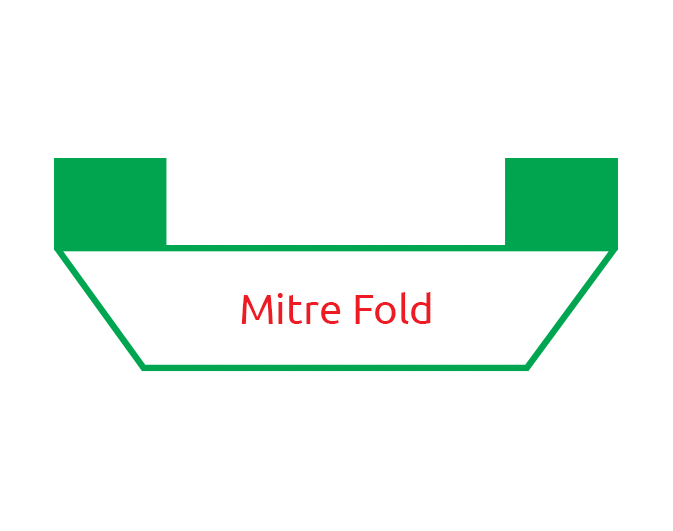
With miter fold labels, the ends are folded under and up, creating a tab to be sewn into a seam. This fold does require an extra charge.
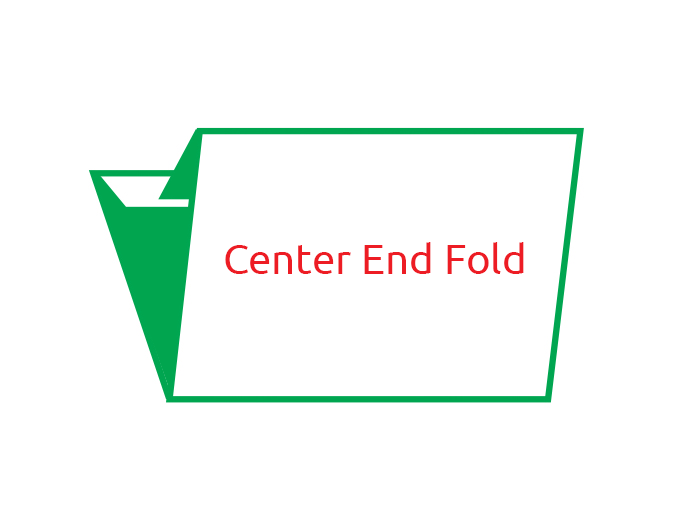
Center End Fold resembles a Manhattan fold and centerfold label. In this type of fold, the ends of the custom label are again folded on the inside so that you get a neat area to sew the label on the fabric of your choice.
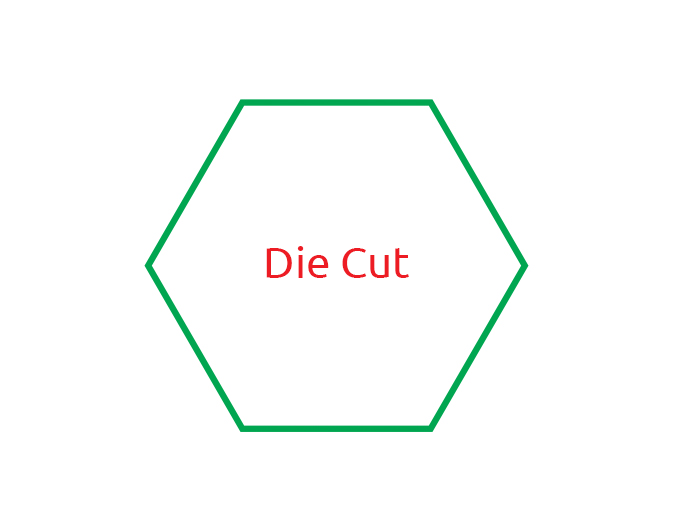
Die Cut Fold involves cutting the material (typically paper, fabric, or synthetic materials) using a die-cutting machine. The die (a sharp metal mold) is shaped to cut the label into specific shapes, with pre-marked areas where folds will happen.
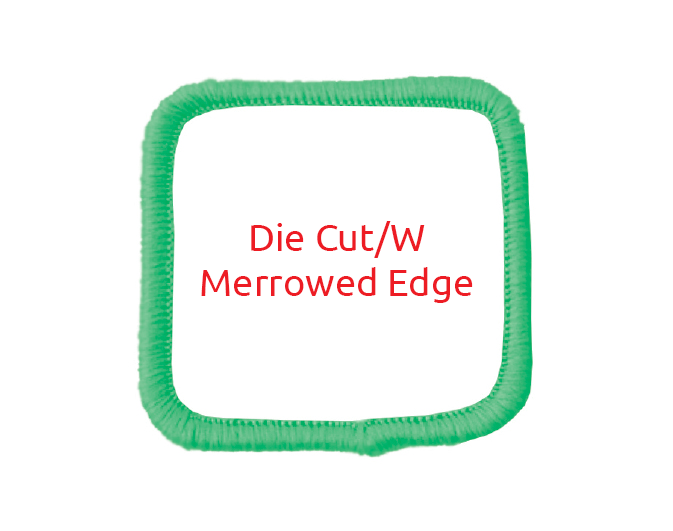
A Die-Cut Merrowed Fold for labels is a specific type of folded label construction that combines the die-cutting and merrowing processes. It's commonly used for fabric labels or garment tags, especially in the textile and apparel industries. This combination offers both precision and durability for the labels, making them ideal for use in clothing or accessories.

AI answers can be wrong — our team confirms every quote. Chats may be saved to improve our service.